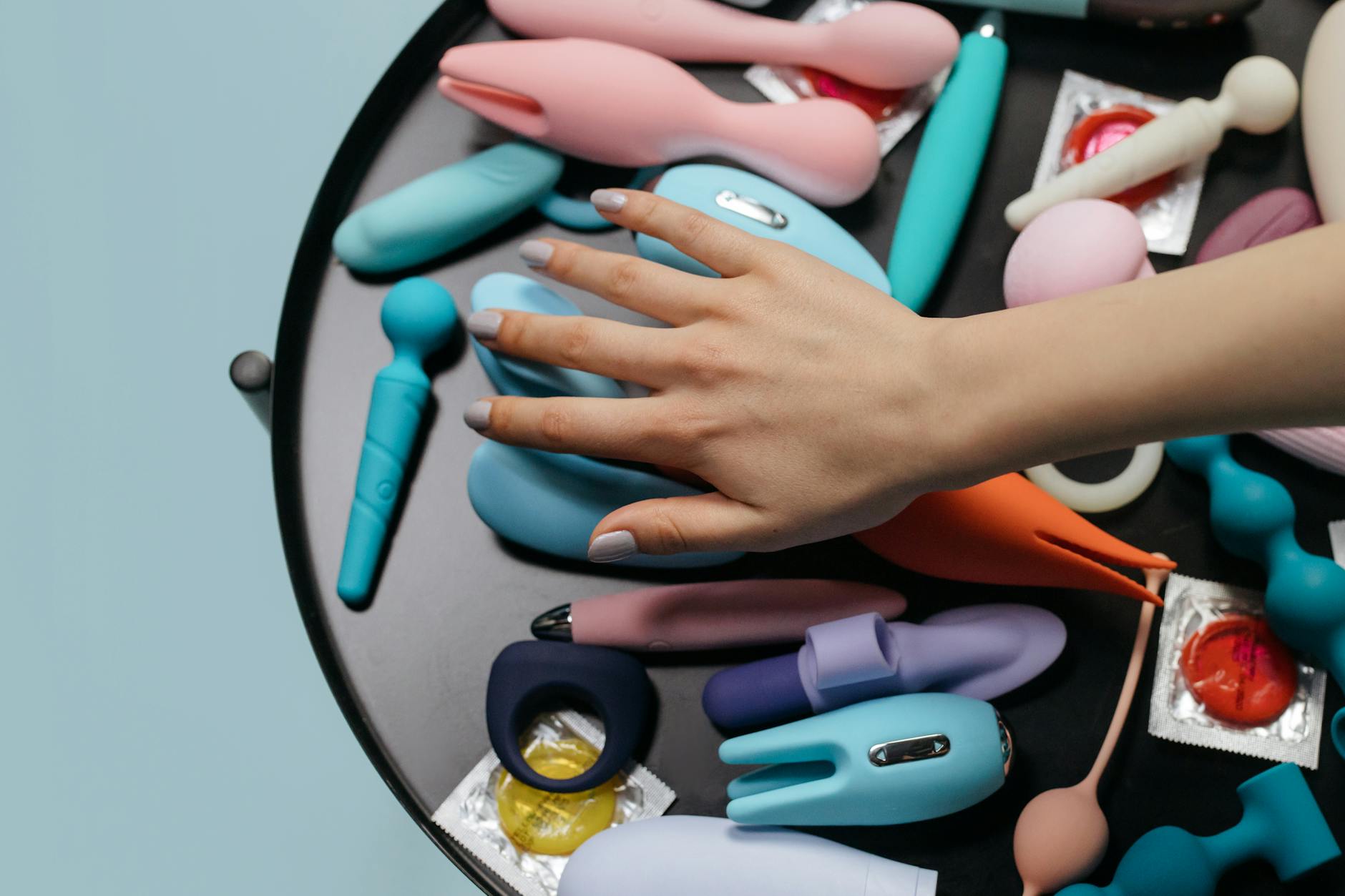
Antidepressants saved your life. Now they're in the way of your sex life.
This is the part nobody warns you about. You got on SSRIs, things got better, your brain chemical imbalance leveled out, and then about six weeks in you realized you couldn't come. Or you didn't want to. Or both. And your prescriber said something like "that usually goes away" except it didn't.
You're not broken. You're on a medication that works on the same neural pathways that fire during arousal. The good news: there are concrete ways to work around this, and tools like lemon vibrators can be part of the solution. But first, let's separate what's medical from what's fixable at home.
How SSRIs actually flatten desire
Antidepressants work by keeping serotonin in your system longer. That's what steadies your mood. But serotonin is also involved in sexual response. It tells your brain to slow down, relax, disengage from immediate stimuli. That's helpful when you're having intrusive thoughts at 3 a.m. It's less helpful when you're trying to get aroused.
The result: longer time to arousal, difficulty with orgasm, reduced genital sensation, lower desire altogether. For some people it's temporary. For others it's persistent. And yes, it's genuinely a side effect worth taking seriously, not something to white-knuckle through.
Here's what I tell my clients: your brain chemistry was dysregulated. The medication fixed that. But now your nervous system needs a different kind of support to rebuild arousal response. That's not a failure of the medication. That's just biology catching up.
Why standard vibrators often don't help (and lemon vibrators sometimes do)
If you've tried a regular vibrator and it felt overwhelming, numb, or just pointless, you're not alone. High-frequency vibration can feel like overstimulation when your nervous system is already dampened. Lemon suction-based vibrators work on a totally different mechanism.
Instead of rhythmic vibration, they create a gentle suction and release pattern. For people whose arousal pathways are slower to activate, this creates a different sensation profile. It's less about aggressive stimulation and more about building pressure gradually. This works particularly well when desire itself is the bottleneck, not physical sensation.
Is it a magic fix? No. But I've seen people restart their own pleasure with a lemon clitoral vibrator after three years of numbness on SSRIs. The mechanism isn't mysterious. It's just a different entry point into arousal.
The conversation you need to have with your prescriber
Don't skip this part. Your doctor needs to know that sexual side effects are affecting your quality of life. This changes the equation. You have legitimate options.
Option one: timing. Some people take their SSRI at night so the peak concentration happens during sleep, and morning or afternoon arousal is less affected. This only works if the timing shift doesn't destabilize your mood.
Option two: switching medications. Some SSRIs have lower sexual side effects than others. Sertraline and paroxetine hit desire harder than escitalopram or fluoxetine. If you've been on the same thing for a while, switching might be worth discussing.
Option three: adding something. Low-dose bupropion, buspirone, or occasionally testosterone can help counteract the sexual flattening. These need monitoring, but they exist.
Option four: staying the course with behavioral and mechanical support (which is where lemon vibrators come in). This is valid, especially if the alternative is switching to a medication that doesn't work as well for your mood.
Your doctor should help you weigh these. If they dismiss sexual dysfunction as unimportant, find a different prescriber.
How to rebuild arousal when it's been flattened
Medication is one piece. But your nervous system also needs practice believing that pleasure is possible again. Here's what actually helps:
Solo exploration first. This removes partner pressure and the performance anxiety that kills desire twice as fast. Spend time touching yourself without a goal. Not toward orgasm, just sensation. This rewires your brain's arousal network gradually.
Longer warm-up time. You're not lazy. Your nervous system is working harder to activate. Budget 20-40 minutes instead of 10. This isn't a sign you're broken. It's actually typical when desire is medicated.
Temperature and context. Warm up the room, take a bath first, light a candle. Your sympathetic nervous system (fight-or-flight) is probably overactive from the flattening. Creating safety signals helps.
Lemon vibrators specifically. The suction pattern mimics some of the natural stimulation that happens during arousal, without the overwhelming intensity of high-frequency buzz. Start at pattern one and sit with it. This is not a race.
Cognitive work alongside. Desire isn't just physical. If you've spent months thinking "I'll never feel this again," your brain believes that. Working with a therapist or coach on arousal permission helps. Your pleasure actually matters.
Real timelines and expectations
Here's what I've seen clinically. Some people regain full arousal capacity within weeks of switching medications or adding a second one. Some take three to six months of gradual nervous system rewiring. Some find a plateau where they function well but not quite like before. And some eventually adjust their medication and get back to baseline.
None of these outcomes is failure. They're just different paths through a neurological challenge.
What I don't see is people who give up entirely and still feel good about it. The people who rebuild pleasure (whatever that looks like for them) report better relationship satisfaction, more self-trust, and often better mood overall. Pleasure and mental health are linked. Addressing both matters.
When lemon vibrators fit into your life
If you're exploring solo: they work as a non-judgmental sensation tool. You can use them with zero performance pressure. The lemon's design is quieter than traditional vibrators, which helps with the headspace of exploration.
If you're partnered: introducing a lemon clitoral vibrator into shared time can actually reduce pressure. Instead of "can you come," the focus shifts to "what sensation do we both enjoy." That's a completely different conversation, and a healthier one.
If you're trying to navigate disclosure: showing your partner an article like this one, or asking "can we try something that might help me feel more," is often the opening that leads somewhere good. Partners usually want you to feel pleasure. They're just waiting for permission to help differently.
People also ask
Do lemon vibrators work if you've never used a toy before?
Yes. The suction mechanism is gentler than traditional vibration, so it's actually a good entry point for people with slower arousal or medication-related numbness. Start with the lowest intensity and give your body time to respond. Pleasure rebuilt after antidepressants is often slower to activate, and that's okay.
Can I use a lemon vibrator if I'm still on my SSRI?
Absolutely. The vibrator isn't replacing your medication. It's a tool to help your nervous system reconnect with sensation while you're on the medication. Think of it as part of rebuilding arousal capacity, not a workaround. Many people use both successfully.
How long before I feel a difference?
Some people notice something in the first or second use. Others need a few weeks of consistent exploration. Your nervous system rewires slowly. That's not bad. It means the changes stick. Be patient with yourself.
Should I tell my prescriber I'm using a vibrator?
You don't need to, unless they ask about your sexual function. What matters is telling them if sexual side effects are affecting your life so they can help you address the root cause. The tools you use to rebuild arousal are between you and your partner if you have one.
Is this side effect permanent?
Not usually. For most people, sexual function returns once the medication is adjusted or stopped. Some people do experience persistent changes. Your prescriber can help you figure out which category you're in and what options exist.
Can I combine a lemon vibrator with therapy for desire?
Yes. Actually, I recommend it. The physical sensation work and the cognitive work together. A therapist can help you process why desire flatlined and rebuild the mental side while you're rebuilding the physical side with tools like lemon sexual toys.
The bottom line
Antidepressants are often necessary. Sexual flattening is a real side effect, not a personal failing or something to be ashamed of. And there are genuinely effective ways to rebuild arousal, both medical and mechanical. Lemon vibrators can be part of that picture because they work differently than traditional toys. They don't pressure you into intensity you're not ready for. They give your nervous system permission to activate slowly.
Your pleasure matters. Your mental health matters. You don't have to choose between them. But you do need to have the conversation with yourself and your prescriber about what you want and what you're willing to work toward. Start there. Everything else builds from that honesty.
Questions about how to talk to your doctor about this, or how to navigate desire with a partner? Let's talk. Reach out anytime.